


You may know that taking care of the bugs in your gut, or gut microbiome, could help you live longer. But a different collection of microorganisms is getting attention for its health credentials.
Researchers have known for decades that people with problems such as gingivitis, tooth decay and missing teeth are more likely to have a stroke and develop chronic conditions such as cardiovascular disease, cancer, diabetes, obesity, rheumatoid arthritis and Alzheimer’s.
“I’ve been in this business for over 50 years,” Judith Jones, a professor who researches oral disease at the University of Detroit Mercy School of Dentistry, told Business Insider, “Centenarians have more teeth than people who don’t live that long.”
The possible reasons for this are “messy,” he said: “It’s not simple science.”
Losing teeth, for example, can affect our self-esteem and quality of life. We are less likely to socialize if we feel self-conscious and have trouble eating nutritious but hard-to-chew foods like nuts, vegetables, and lean protein.
However, growing research shows that the microbes that live in the mouth (the oral microbiome) could play a bigger role in our health than previously thought.
Studies have shown that as people age, they are likely to live longer if they have more of their teeth. Cometary/Getty Images
Bryan Johnson and Andrew Huberman talk to their followers about oral health
Some of the loudest voices in the longevity space embrace the idea that a clean mouth could help us live longer.
Last month, tech CEO-turned-biohacker Bryan Johnson shared his nine-step “oral health protocol” in his newsletter, which includes tongue scraping and tea tree oil to prevent chronic disease.
Days later, Andrew Huberman devoted an entire episode of his chart-topping “Huberman Lab” podcast to the potential connection between the oral microbiome and physical and mental health.
And industry newsletter Fitt Insider reported on microbiome-focused products entering the $55 billion oral care market, including a prebiotic toothpaste with ingredients tailored to the bugs living in a customer’s mouth.
From 2023 to 2024, sales of oral care products in the US will grow 6.3%, from $10.8 billion to $12.2 billion, according to market research firm Mintel. Investors are likely hoping to repeat the success of the global digestive health market, which is forecast to reach $71.95 billion in 2027, up from $37.93 billion in 2019, according to Fortune Business Reports market research.
Poor oral hygiene is associated with a higher risk of multiple chronic diseases. RealPeopleGroup/Getty Images
Both the mouth and the gut have a microbiome
Just like the gut, the oral microbiome is home to a collection of “good” and “bad” microorganisms, but it works differently.
A healthy gut microbiome is one with a diverse range of inhabitants. These microbes have been linked to a variety of physical and mental health benefits—from a stronger immune system and better mood to a lower risk of disease, including type two diabetes and colon cancer. In contrast, a healthy oral microbiome is relatively sparse.
Brushing and flossing hit the reset button and prevent harmful microbes from colonizing and maturing, Jonathon Baker, an assistant professor at Oregon Health & Science University who studies the oral microbiome, told BI.
He likened the ecosystem of the oral microbiome to a landscape after a volcanic eruption. It is barren (after thorough cleaning), but plants eventually grow and change the environment, allowing secondary plants such as moss to grow. After a few years (or a few days of not brushing hard enough), the moss breaks down the rock and more plant species emerge, until eventually you have an entire rainforest of microbes.
The more mature types of germs are the ones that can cause infections that break down the barrier between the gums and the blood, allowing them to enter the bloodstream. That’s why bleeding gums are a hallmark of periodontal disease, Baker said.
Once in the bloodstream, the bacteria can travel to different parts of the body and cause damage and inflammation, he said. Bacteria that cause gingivitis have been found in the brains of people with Alzheimer’s, in the tumors of colon cancer patients, and in the heart tissue of people with cardiovascular disease.
Whether these microbes cause chronic disease, contribute to their development or simply make the body more vulnerable to disease by causing inflammation is uncertain, Baker said, because research into the oral microbiome is in its infancy.
However, evidence shows that there is a strong link between good oral hygiene and a lower risk of cardiovascular disease, with a study suggesting that weekly flossing appeared to reduce the risk of ischemic stroke by more than a fifth. Similarly, a review of studies on oral health and chronic disease published in 2019 found that the most commonly reported association was between periodontal disease and cardiovascular disease.
Baker believes that as our understanding develops, we may one day see “advances that will significantly help our overall health.”
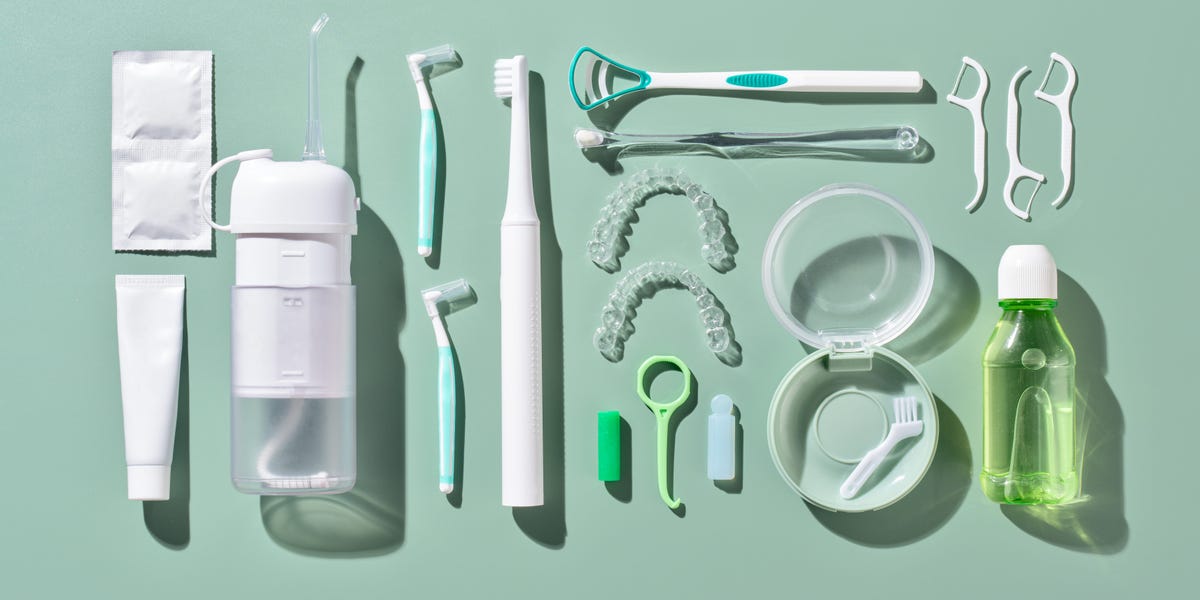
Brush and floss thoroughly daily
Flossing reaches places in the mouth that a toothbrush cannot. Yulia Reznikov/Getty Images
Jones, who began her career as a dental hygienist, said good oral hygiene includes brushing your teeth thoroughly at least once a day. “Most dentists recommend twice a day. I think part of that is getting people to do it really well at least once a day. And part of it is making people’s breath smell better,” he said.
It’s also important to floss daily because a toothbrush can’t reach the spot between the teeth and gums, known as the periodontal pocket, where the disease occurs, he said.
“Flossing helps you maintain your teeth,” Jones added.
When it comes to what kind of yarn to use, she believes simple is best. “They say now even the water jets are effective, although I can’t imagine they are, to be honest,” he said.
Baker reiterated the importance of flossing. “Before I got into this field, I was definitely one of those people who didn’t floss much,” she said. But as a student, he saw “very graphic images” of advanced periodontal disease.
“I was like floss every day from now on, and I have,” she said.
