


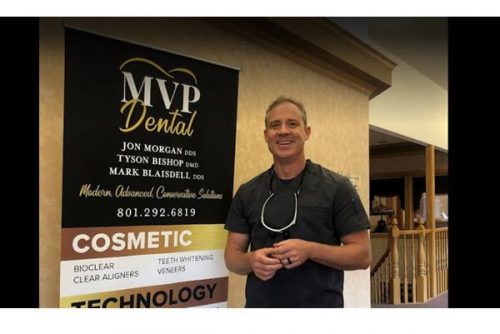
MVP Dental – Bountiful, UT (+1 801-292-6819) has updated its treatments with an alternative to traditional dental bonding, crowns and veneers. The demand for Bioclear here is growing rapidly
Bountiful, United States, Feb. 03, 2022 (GLOBE NEWSWIRE) —
Bioclear updated treatment from MVP Dental, Bountiful, UT is in high demand because people are looking for a lower cost alternative to crowns and veneers. Bonding traditionally fulfills this role, but Bioclear is much stronger and lasts longer.
This practice is conveniently located at 625 500 S Suite 203, Bountiful, UT 84010 and welcomes patients from Centerville, Farmington, Layton and Kaysville.
More details about Bioclear can be found at
Bioclear is minimally invasive, meaning it preserves more of the original tooth than a veneer or crown procedure. It’s also cheaper!
Dr. Jon Morgan of MVP Dental, Bountiful UT adds, “Bioclear can be used to treat many dental problems, but when it comes to dental work in the back of the mouth or large cavities where there is not much of the original tooth structure left, Bioclear is not always the best choice. It requires great strength on the tooth to maintain its properties. is recommended, a traditional filling or dental crown will be used.’
It is an alternative to veneers, crowns and bonding. See more information about veneers here and crowns here
Dr. Morgan offers porcelain veneers, a proven and traditional option for improving the aesthetic appearance of teeth. But now it also offers an alternative to veneers, Bioclear. Bioclear uses a fluid composite material formed from clear mylar wrapped around the tooth. The composite then flows into the shape and makes a perfect tooth.
The surfaces of the teeth are lightly scratched before receiving the Bioclear composite. This is different from preparing teeth for veneers, which involves shaving 0.5 to 7 mm of healthy tooth enamel from the front of the teeth. Once the teeth are etched, a thin mylar is placed around each tooth. “Bioclear” calls these matrices. It is basically the form that will form the flowable composite resin.
The composite resin is then poured. This resin is slightly heated to make it liquid. This allows it to flow into the shape created by the mylar dies. The composite is then cured and hardened.

