


From red carpet regulars to reality stars, more celebrities are openly discussing their cosmetic procedures than ever before — and it’s reshaping the way women everywhere make decisions about their bodies.
“In the past, plastic surgery was something people felt they had to deny or be secretive about,” explains the Houston board-certified plastic surgeon. Dr. Kriti Mohan. “But now we’re seeing more transparency and honesty — and I think that’s a positive change.”
According to Dr. Mohan, this shift celebrity transparency has helped normalize conversations around cosmetic surgery, reduce stigma, and create more realistic expectations for women considering it.

What’s even more impressive? The trend is not to get bigger or bolder.
“Many of the trends we see today are moving away from the extremes,” he adds.
“People want results that are balanced, natural and proportional. There’s more emphasis on choosing the right implant, the right profile — something that enhances their natural anatomy rather than dramatically altering it.”
And now, a new technology is giving patients the power to visualize exactly what it might look like on their own body.
A new app that helps women see themselves again
Johnson & Johnson released the Arbrea Breast Simulator Surgeon app in the US, a breakthrough that allows surgeons to create realistic 3D simulations of breast augmentation options in just 60 seconds — directly for women during meetings on smartphones or tablets.
For women who may feel nervous, unsure or overwhelmed, the app offers something invaluable: a clear, personalized visualization of the potential outcomes before making a decision.
“Women don’t guess anymore – they see themselves,” says Dr Mohan. “And you can feel the room shift when that moment happens.”
Jess’s story
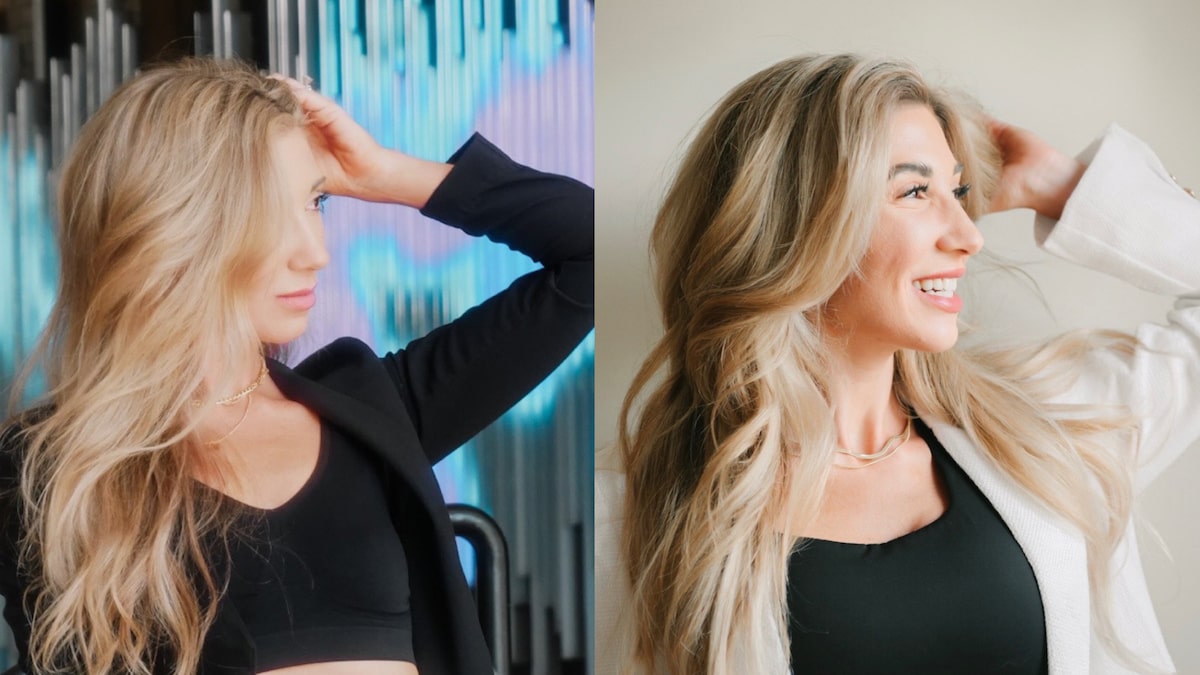
For Jess Owensa 35-year-old mother of two from North Carolina, accessing the patient-facing version of the simulator app didn’t just help her make a decision—it helped her reconnect with her sense of self. “My children are my greatest joy,” she says. “But after two pregnancies just 19 months apart and over two years of breastfeeding, my body changed in ways I didn’t expect.”

Then came a skin cancer diagnosis during her second pregnancy—an emotional jolt that made her hyper-conscious of every change in her body.
“Pregnancy and childbirth were this combination of gratitude and reckoning,” she admits. “I was proud of what my body was doing, but I also felt a little lost. My shape had changed, the volume had changed, the skin had changed. I just wanted to feel like me again – not someone different.”
When Jess saw her personalized Arbrea simulation for the first time, she felt a wave of reassurance. “I suddenly saw the version of myself that I thought would never come back,” she says.
Because seeing matters
Dr. Mohan sees moments like Jess’s every day.
“The visual makes such a difference,” he explains. “Women stop worrying about numbers or cup sizes and start thinking about what’s natural, proportionate and right for their bodies.”
Studies reflect the impact: clinics report consult-to-surgery conversion rates of up to 87% when using the Arbrea app, and patients rate simulations 3.4 out of 4 for how well they match the final results.
“It reduces stress, it reduces uncertainty,” says Dr. Mohan. “Patients come in with questions and leave with confidence.”
A cleaner path forward
As the Arbrea app rolls out in the US, its impact is already being felt — especially by women like Jess, who wanted more than just a procedure. They wanted a way to see themselves again.
“It wasn’t about becoming someone new,” says Jess. “The goal was to restore something I had lost – and to feel like myself again.”
For so many women considering breast augmentation, this clarity can make all the difference. And now, thanks to new technology and a cultural shift driven by outspoken public figures, travel is becoming more open, more confident and more personal than ever.
TMX contributed to this article.
