


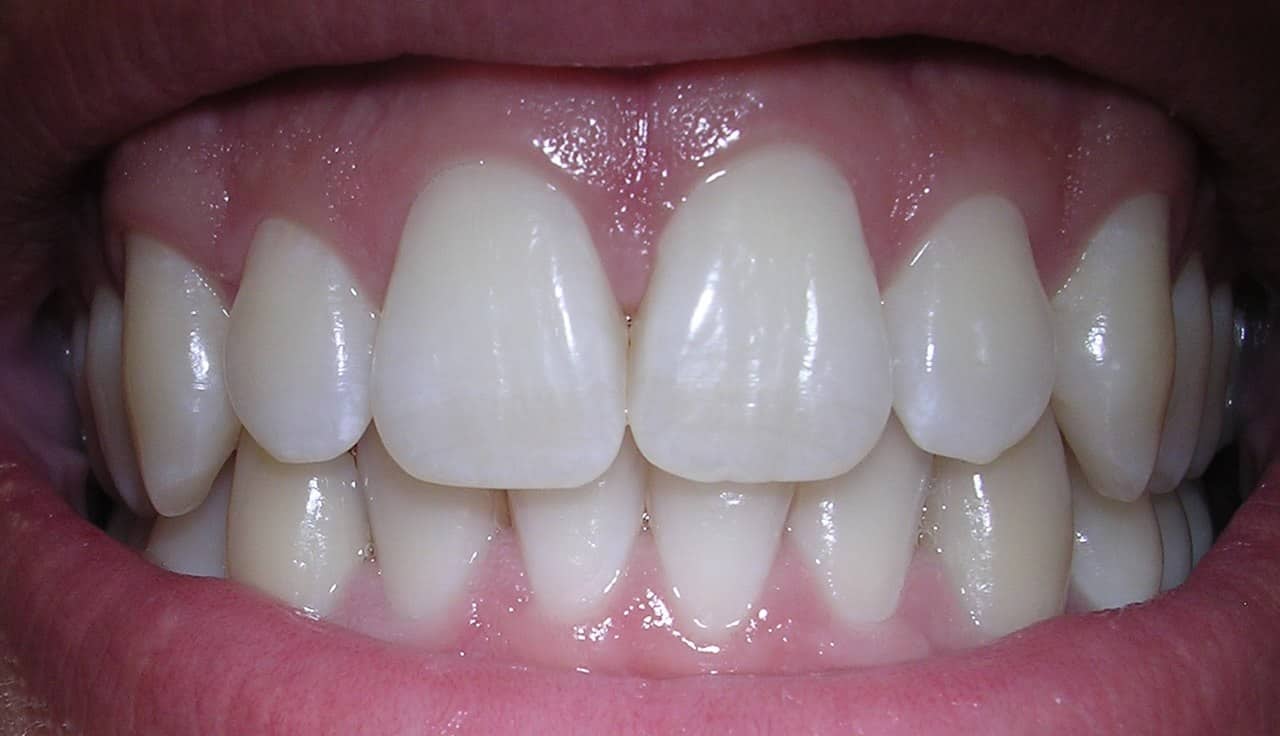
Teeth whitening is a billion-dollar ritual, but it’s rarely “healthy.” Most of the time, it’s like trading yellow stains for tooth sensitivity, thanks to the aggressive peroxide used in almost every kit. But a team of researchers just found a way to ditch the chemicals and use physics instead.
The work, published in ACS Nanofocuses on a ceramic material with a useful quirk: it produces tiny electrical charges. These charges can then drive the chemistry right where the bristles meet the tooth surface.
Motion Whitening
The secret is a new ceramic powder called BSCT. It is made of barium titanate. add some strontium and calcium to the mix and you have a smart whitening agent.
When an electric toothbrush vibrates against the BSCT, the material produces a small electric field – a phenomenon known as piezoelectricity. The field helps create reactive oxygen species on site, which can attack the organic molecules that make stains appear brown or yellow.
In laboratory tests, researchers brushed stained human teeth with the powder for several weeks of daily use. Treated teeth were nearly 50% whiter than those brushed with saline.
“This work offers a safe, at-home teeth whitening strategy that integrates whitening, enamel repair, and microbiome balance for long-term oral health,” Min Xing said in a statement from the American Chemical Society.
Repair and balancing

For decades, teeth whitening has had an inherent trade-off between visual improvement and protection of tooth structure. Peroxide-based products can remove stains, but the process can also roughen the enamel or pull minerals from the surface of the teeth.
BSCT aims to change that.
As the powder vibrates, it releases calcium and strontium ions. In the lab, these ions helped form new minerals in enamel and dentin. Essentially, the powder whitens the tooth while simultaneously patching the surface.
The benefits don’t stop at the surface. Our mouths are complex ecosystems and when “bad” bacteria dominate, we get tooth decay and gum disease. The researchers found that the same electrical charges that whiten teeth also disrupt the membranes of harmful microbes.
To test this in a living system, the team turned to rats fed a high-sugar diet. After four weeks of daily one-minute brushing, rats given the powder showed significantly less oral inflammation and a much healthier balance of oral bacteria compared to the control group.
However, the project remains early. BSCT is not yet a consumer toothpaste, and testing so far involves lab-stained teeth and a rat model—not people using the product in everyday life. If confirmed in human studies, the findings suggest that routine brushing with an electric toothbrush could one day be combined with treatments designed to whiten teeth and also maintain their structure and overall oral health.
Still, it’s early days. We are not yet ready to buy BSCT from the pharmacy. The technology is still in the phase of laboratory tests and animal models. However, the data points to a future where your morning brush actively rebuilds your smile and kills the bacteria trying to destroy it.

