


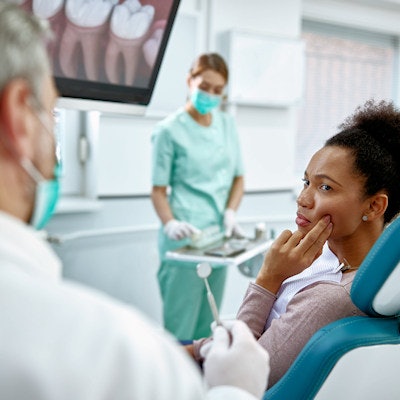
Women undergoing root canal treatment may experience increased dental anxiety during certain phases of their menstrual cycle, likely linked to lower estrogen levels, according to a study recently published in Scientific Reports.
By considering the phases of the menstrual cycle, clinicians can better predict stress and provide more personalized care that can improve treatment outcomes, the authors wrote.
“Our findings show that women are particularly vulnerable to increased dental stress during both the menstrual and secretory phases of their cycle,” wrote the authors, led by Merve Çoban Öksüzer of Pamukkale University in Denizli, Turkey.Sci RepOctober 10, 2025, Vol. 15:1, 35442).
Dental anxiety is common among patients and often leads to delay or avoidance of treatment. Research shows that women cope better with stress during the reproductive phase, when estrogen levels rise, but experience more stress during the secretion phase, when estrogen falls. This study aimed to examine how the menstrual, proliferative and secretory phases possibly influence dental anxiety in women prior to root canal treatment.
The analytic cross-sectional study included 259 participants aged 18 to 50 years, of whom 191 were women requiring root canal treatment. Female participants were categorized into menstrual (Days 1 to 4), proliferative (Days 5 to 14) and secretory (Days 15 to 28) phases based on self-reported cycle data, they wrote.
Males were included as a comparison group to assess gender differences. Anxiety levels were measured using the Modified Dental Anxiety Scale (MDAS), the State Trait Anxiety Inventory (STAI), and physiological indicators such as blood pressure and oxygen saturation. Data was collected from September 2023 to October 2024.
Menstrual and secretory phase women showed significantly higher MDAS and STAI-trait (T) scores than men (p < 0.001). In addition, STAI-state (S) scores were higher in all three menstrual phases compared to men (p = 0.001). Regression analysis confirmed that these associations remained significant after adjustment for confounders, while age, education, preoperative pain, and physiological measures had no significant effect, they wrote.
Menstrual phase was associated with a mean increase of 3.5 points in MDAS scores (p < 0.001), and both menstrual and secretory phases increased anxiety in all models. Overall, hormonal cycle phases explained about 4% to 6% of the anxiety score variance, and a strong positive correlation was found between the MDAS and STAI-S and STAI-T scores.
However, the study had limitations. Uncontrolled factors such as previous dental experiences, sleep quality and lifestyle habits may have influenced the relationship between menstrual cycle phases and stress levels, the authors added.
“By considering the phase of the menstrual cycle when planning and delivering dental care, practitioners can develop more personalized approaches that improve patient comfort, satisfaction, and overall treatment outcome,” they concluded.
