


The Independent was not involved in the creation of this sponsored content.
Hair loss is a process that rarely happens overnight. A few extra strands in the shower, a wide parting, photos that suddenly make you look older than you feel. For many, this slow change is more than cosmetic. Hair loss destroys self-confidence and also gives you the feeling that you are really aging.
While lotions and pills can help some people, they often don’t provide consistent results. At some point, the question becomes: if you want real change, what will actually work? For thousands of men and women every year, the answer is a hair transplant procedure. And increasingly, the destination is Turkey.
But why do people choose to make one hair transplant in Turkey? This article delves into why Turkey has become a hair transplant hub and explores the cost of a hair transplant at a top clinic.
Why Turkey has become a hub for hair restoration
Price matters, but it’s only part of the story. In London or Manchester, a hair transplant operation can cost well over £10,000. In Istanbul, the typical hair transplant price ranges from around £2,000 to £3,500. Lower overheads and operating costs explain the difference, not lower standards.
But cost alone does not create global fame. Turkey’s rise comes from scale and routine. Hair transplant surgeons here perform thousands of surgeries annually, using modern techniques such as Follicular Extraction (FUE) and the most advanced FUE sapphire hair transplant.
Whole neighborhoods of Istanbul now cater to this form of medical tourism, with clinics, hotels, pharmacies and recovery rooms designed for international patients. Packages are part of the appeal.
“If someone is bald from the forehead to the donor zone, we can’t give them the density they had when they were 15. But we can still give them a very good result, maybe 80% of what they want,” says Dr. Akar Levent. In addition, he adds what his clinic offers to his patients: “We organize everything: pick-up from the airport, hotel, transfers to the hospital… And we don’t stop after the procedure. We follow up to make sure patients are happy with their results.”
A typical package usually includes:
- Pre-operative consultation and blood tests
- Airport transfers and hotel accommodation
- Medicines and specialized shampoo for restoration
- Structured postoperative care with follow-up appointments
This structure means less stress. Patients can focus on treatment, enjoy a world-class city like Istanbul in Turkey, and stay in a nice hotel. This is, for most people, much better than driving to Manchester or London for an expensive hair transplant and then returning home. Even with the cost of the flight, your hotel and the procedure itself, a Hair transplant in Turkey costs much less than in the UK.
Prices are much lower in Turkey, but this is no longer its main attraction, according to Dr. Levent Acar: “Many patients used to come only for the price. Now, even rich patients come because of the quality. Our prices are fair because we want everyone to have access, but quality is always our focus.”
Compare prices at home and abroad
When it comes to prices, you will quickly see the striking difference between the costs in both countries. Here are the prices:
- UK: usually £8,000-12,000 for hair restoration
- Transplant in Turkey: usually £2,000–£3,500
These figures are all prices for Turkey. Most clinics in Turkey offer an all-in package for foreigners. However, the final bill is determined by much more than just the country you’re visiting. It doesn’t matter if you have your hair transplant in the UK or abroad. these things will have an impact on the final price:
- Technique: FUE hair transplant or (DHI) direct hair implantation
- Total hair transplants required for natural coverage
- Surgeon experience and clinic reputation
- Add-ons to the package, such as upgraded hotels or extended monitoring
Inside the modern transplant
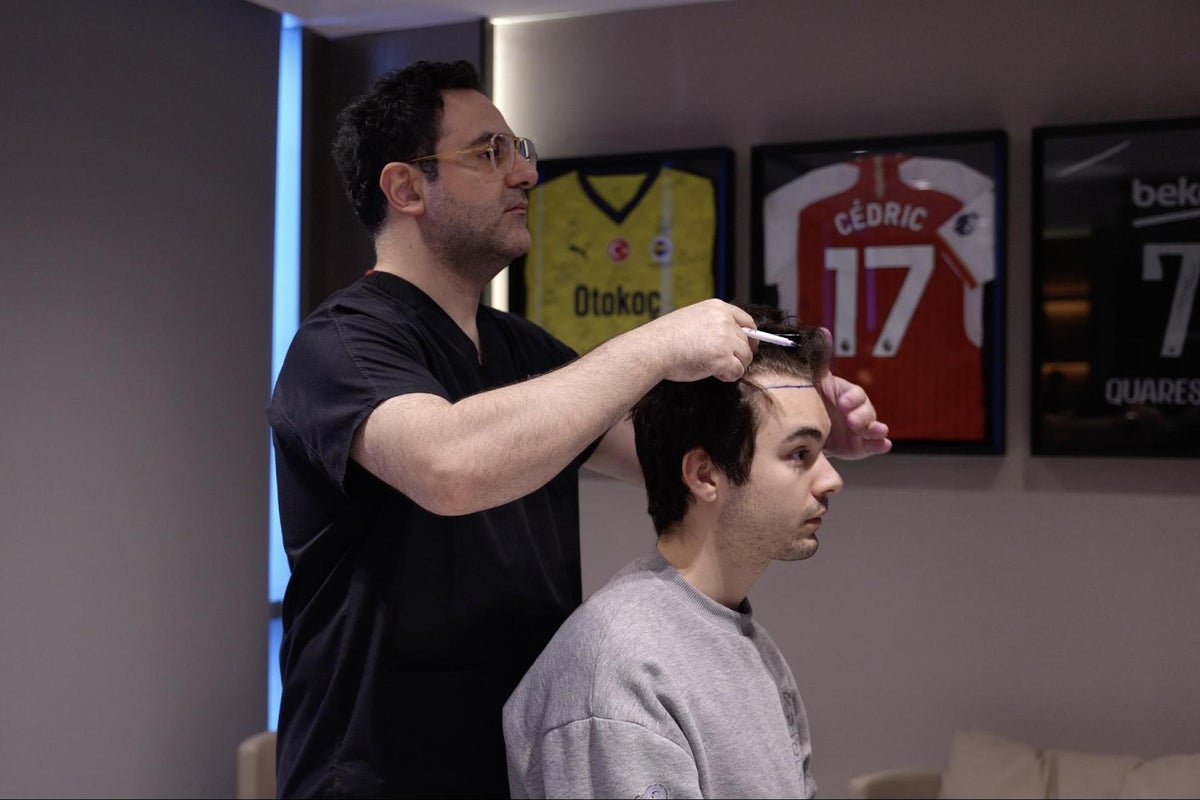
A modern hair transplant procedure is both science and craft. In the FUE (follicular unit extraction) method, individual hair follicles are removed one by one from the donor area, usually at the back of the scalp, where hair is genetically resistant to loss. Each follicle is carefully stored to maintain viability and aims to support strong graft survival rates.
In a Sapphire FUE session, surgeons create micro-channels with a sapphire blade before placing the grafts. Smaller incisions can reduce scalp trauma and may support faster recovery for some patients. The goal is to grow the transplanted hair as if it had always been part of the person’s natural hair. Good surgeons strive for natural results that last.
Hair transplants are designed to avoid looking artificial when visiting a reputable clinic. “Hair transplantation has been practiced for more than 80 years… Now, we have developed methods designed to blend naturally with existing hair, making the results less noticeable as a procedure,” is what Dr Levent Acar from Cosmedica Clinic says about the procedure.
Success depends on three main factors:
- The health of the donor area
- The skill of the surgeon and the team
- Patient engagement in follow-up care
Following the clinic’s advice is vital as it can help encourage healthy regeneration. All patients should note this and discuss it with their hair transplant clinic. Dr. Acar is excited about the current state of hair transplants: “Hair transplants used to be considered something only for celebrities… Now, anyone can do it. The quality is comparable to what many well-known customers are looking for.”
Recovery and aftercare: the quiet work behind results
The surgery may only take a day or two, but the fundamental transformation unfolds over months. Good clinics emphasize that the period after a hair transplant operation is just as critical as the operation itself.
In the first week, the scalp is tender. Small crusts form around each graft and will peel off naturally. Clinics provide detailed washing instructions and provide mild shampoo to protect hair follicles. Gentle cleansing prevents infection and helps each hair graft settle down. But according to Dr. Levent Acar, the pain is minimal: “The operation is painless. The recovery is a little uncomfortable. The best time is after about 13 days, when the crusts wash off and you see the clear hairline.” And besides, he adds, “the flight the next day is safe.”
Miscarriage is normal. Transplanted hairs often fall out within a few weeks, leaving the roots dormant. New hair often begins to appear within a few months, with fuller results usually felt between six and twelve months.
What the long-term results look like
When it comes to success, it can make a visible difference in appearance, even for those with significant thinning hair. It is essential to have hair that grows and behaves similarly to the rest of the scalp. That’s why experienced surgeons spend so much time planning the number of grafts, placement angles and density of each section.
A well-executed hair transplant can last a lifetime. “As the hair we receive comes from the permanent donor zone, these follicles are not affected by DHT hormones; transplanted hairs are often long-lasting,” says Dr. Levent Acar.
Because follicles from the donor area are genetically resistant to hormones that cause male pattern baldness, transplanted hairs usually continue to grow for many years and can be long-term in most cases. But not every man (or woman) is so lucky. Especially with men transplanted at a young age, this is something that could potentially happen.
Restoring a natural hairline often restores confidence in both work and social life. Good clinics do not make promises of instant transformation. They provide good, realistic advice and present extensive information hair transplant before and after photos so customers know exactly what to expect.
How to choose the right clinic
With hundreds of providers competing for attention, choosing a reliable Turkish hair transplant clinic is the hardest part. A few guidelines help narrow down the field:
- Experience matters: Look for surgeons who perform multiple hair transplant procedures each week, not a few per month. Good reviews are key here.
- Transparent planning: A reliable team will map your donor area, provide a realistic estimate of the number of grafts and offer a clear breakdown of costs before you schedule the procedure.
- Technique and equipment: Make sure the clinic offers modern options, such as Sapphire FUE or DHI, and demonstrates high graft survival rates.
- Follow-up care: Structured postoperative care is essential for long-lasting results.
Reading independent reviews, contacting past patients, and scheduling video consultations all help separate genuine expertise from slick advertising. This is necessary, as numerous clinics are emerging with extremely low prices, but also a lack of adequate reviews. Look for the most reliable and high quality clinics in Turkey if you really want to play it safe.
Medical Disclaimer: The information in this article is for educational purposes only and does not constitute medical advice. Always consult a qualified healthcare professional for diagnosis and treatment.
https://www.independent.co.uk/life-style/hair-transplants-turkey-popular-b2844231.html
