


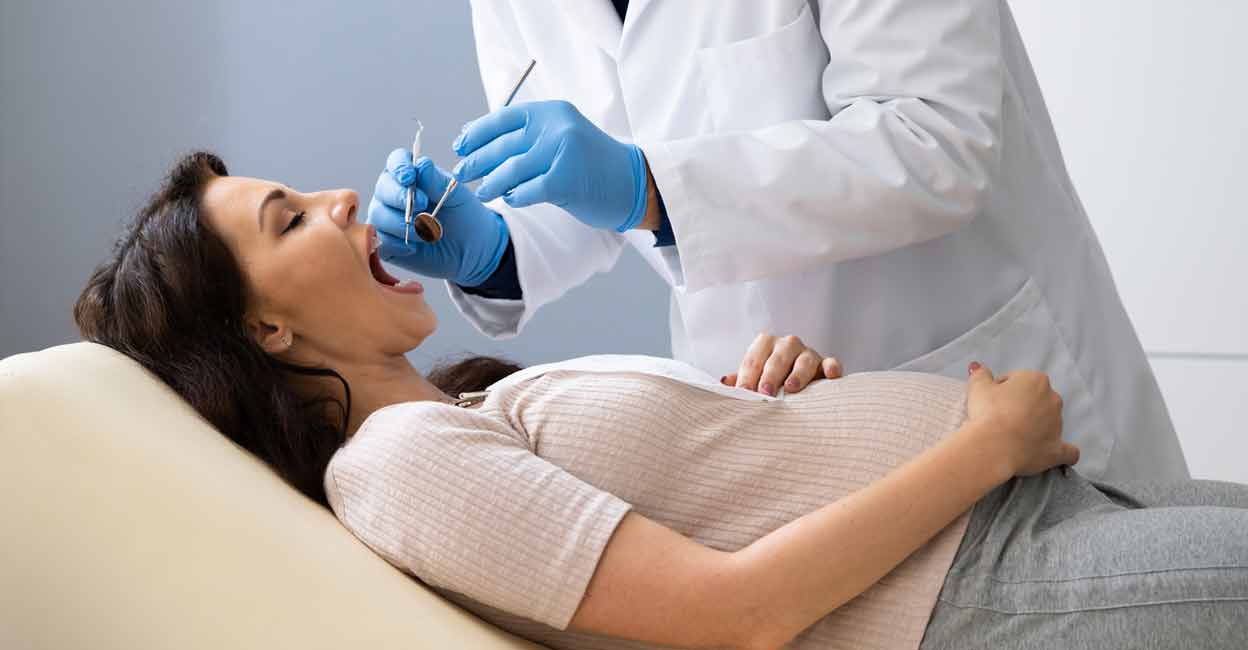
Pyogenic granuloma (inflammation inside the mouth), dry mouth, tooth decay and tooth decay are common dental problems women experience during pregnancy due to hormonal and dietary changes. Photo: iStock/AndreyPopov
Everyone knows that pregnant women experience a flood of hormonal changes during the first few months. Did you know that some of these topics are also dental? Yes! For example, gingivitis, a gum disease caused by plaque buildup, has symptoms such as swollen, sensitive gums, bad breath, and bleeding when flossing. Pyogenic granuloma (inflammation inside the mouth), dry mouth, tooth decay and tooth decay are common dental problems women experience during pregnancy due to hormonal and dietary changes. However, you cannot have a dental treatment as you always do when you are pregnant. There are a few precautions one should take, explains Dr S Jayalakshmi of the Indian Dental Association, Mavelikkara.
Tell your dentist
While procedures like annual checkups and preventive dental cleanings are generally recommended and can even help prevent infections associated with preterm labor, it’s important to let the dentist know that a patient is pregnant, says Dr. Jayalakshmi. “Certain medications and procedures can be harmful to the developing baby, especially in the first three months,” she explains. According to the American Pregnancy Association, the second trimester of pregnancy is ideal if dental work is unavoidable.

According to the American Pregnancy Association, the second trimester of pregnancy is ideal if dental work is unavoidable. Representative image/iStock/Deagreez
What can be done?
1) Professional cleaning of teeth and gums with ultrasonic instruments is recommended, as it helps prevent gingivitis from worsening.
2) There is no harm in filling small cavities during pregnancy and materials such as Glass Ionomer Cement (GIC) or composite fillings can be used safely.
3) Ensure a calcium-rich diet throughout pregnancy.
What should be avoided?
According to Dr. Jayalakshmi, here are the procedures that should be avoided or done only in an emergency.
1) Tooth extractions should, as far as possible, be avoided during the first and last month and a half of pregnancy.
2) Root canal treatment can be performed if there is an urgent need and there is no alternative option.
3) Avoid antibiotics containing tetracycline completely during pregnancy.
onmanorama-topic-general-topics-18-healthcare onmanorama-topic-general-topics-76-health 5ikh085dcfk9isrlqjjrdp7qp5-list 5b9vsielt2dvr4lg8lebt6qted-list onmanorama-pic-1caretal-to onmanorama-topic-general-topics-32-pregnancy 1h16k43gg7nhmg3gkf62i6mndj
