


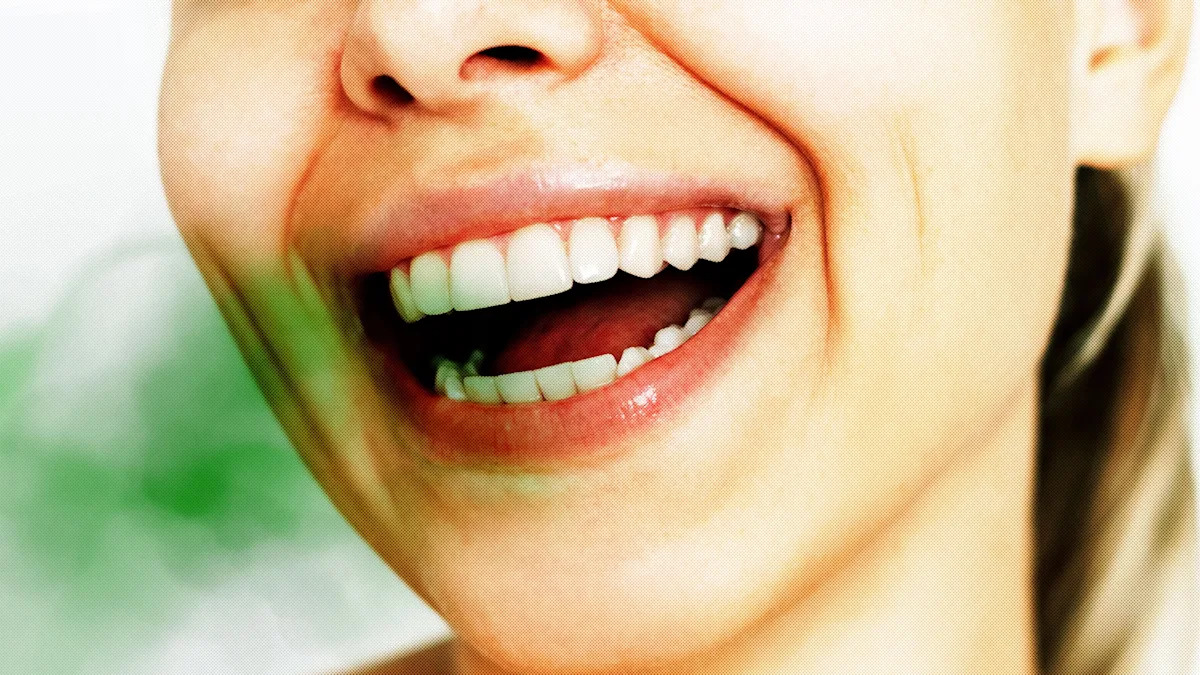
“My self-esteem has really dropped and I’m embarrassed to talk to people.” one Reddit user wrote on the r/DentistPh subreddit. Post title: “Smelly Veneers.”
The anonymous poster sought help for a problem that is receiving increasing attention on social media: the breathing phenomenon unique to those with artificial dental crowns, commonly known as “veneer breathing.”
On TikTok, user @jelks talked about visiting Los Angeles and being “punched in the face out of thin air” when interacting with someone wearing veneers. Commenters quickly chimed in about their own experiences with the strange symptom.
So what causes this distinctly offensive smell? And for those with veneers, is it preventable?
The basics of veneer breathability
Veneers are custom-made caps that fit right over the front edge of one’s teeth and are typically used for cosmetic purposes, giving the wearer a straighter, whiter, and more even smile.
Whether placed individually or in a set, veneers differ from other cosmetic dentistry products, such as crowns, by covering whole tooth, including widths and sides. As we move towards a more people obsessed with appearancethe popularity (and community) of veneers has swelled up. And with this wave comes new problems.
Cosmetic ceramic veneers, such as the one featured, have been on the rise over the last 10 years, with more people than ever seeking the cosmetic procedure. / DR.GARO MANJIKIAN +374 98 001986 / Getty Images
Of course, bad breath itself is not a new problem. Common culprits include coffeecigarettes and particularly spicy meals at the office. But veneer breathing is remarkable in that it explicitly accompanies an aesthetic process so often associated with luxury and vanity.
“‘Veneer breath’ is usually caused by bacteria that gets trapped between where the veneer meets the natural tooth,” said Dr. Jenna Chimon, the chief cosmetic dentist at Long Island Veneershe told The Looker.
Chimon adds that your chances of getting terrible veneer breath increase if your veneers don’t fit perfectly or if your gums are inflamed: “Even if a veneer looks perfect, it may be hiding a little pocket where odor-causing bacteria love to settle in.” With an experienced cosmetic dentist fitting your false teeth caps, however, your chances of developing this unpleasant feature are reduced.
Even if a veneer looks perfect, it can hide a small pocket where odor-causing bacteria love to take up residence.
Dr. Jenna Chimon
While “veneer breath” is more of a catchphrase on social media than a medical diagnosis, looking at the actual medical symptom it refers to can help explain its causes.
“It’s bad dentistry that causes bad breath, [or] bad breath,” he says Dr. Clement Kairouzcosmetic dentist at Apa Aesthetic. He adds that, “on the dental side, it’s either bad case planning or improper dentistry [where] impinge on the gums, or the margins are not clean and you have bulky margins.”
On the patient’s side, Kairouz says this may be because he’s not getting regular cleanings. While twice-a-year cleanings are often the gold standard we’ve grown up hearing about, Kairouz says that’s actually a pretty outdated schedule, and people in general—and those with veneers in particular—should be going every four months for regular cleanings.
To veneer owners that may concern…
If you have veneers and are now very concerned that an unfortunate toxic stench accompanies your fancy new smile, Chimon says to look for (or smell, rather) a lingering odor that quickly returns, even after brushing. “Sometimes a spouse or close friend mentions it, or the patient notices it when flossing around certain teeth,” Chimon told The Looker.
You can also call a professional. “During exams, I can usually identify this by gently lifting the lip and checking for redness along the gum line or signs of plaque around the veneer margins,” explains Chimon. If the actual surface of your veneer is clean but the smell persists, “that’s an indication that the problem is happening at the margin where the bacteria is hiding.”
Kairouz also adds that seeing a professional for suspected veneer breath can be more effective, as they can quickly tell if your bad breath is actually from the veneers themselves or dry mouth elsewhere in the mouth. “Usually if it’s veneer, it’s localized.”
How to avoid breathing in veneers
Fortunately, there’s an easy step you can take to avoid this scary side effect, and it’s a factor that’s completely within your control: choose an experienced dentist when fitting your new smile.”
Do it once and do it right. Don’t rush these things.
Dr. Clement Kairouz
“Do it once and do it right,” says Dr. Kairouz. “Don’t rush these things. This is a medical procedure, it’s not TikTok . Do your research, do your due diligence. Go to someone who does this for a living.”
A professional who can accurately design and bond veneers means less risk of improper gum fit, which can greatly reduce the risk of veneers causing bad breath, says Dr. Chimon.
A word of caution to the wise: properly researching a licensed medical practitioner goes beyond a simple Google or social media search. There are many well-documented cases of people being cheated and duped by self-proclaimed dentists. A recent (and particularly egregious) case featured Brandon Dillardwho billed himself as “Atlanta’s top veneer expert,” was arrested in 2024 after being charged with illegally performing veneer procedures without a license. His practice, A List Smiles Atlanta, according to information he had 157,000 followers on Instagram.

“Don’t rush these things,
In addition to your visits to a cosmetic dentist, make sure you floss and brush regularly and go for regular checkups, especially to check for gum inflammation.
Ultimately, the most effective deterrent is prevention, says Dr. Kairouz. “The best way to avoid bad breath from veneers is to be proactive rather than reactive.”
