


DALLAS, USA: Researchers at the University of Texas at Dallas have introduced a new approach to ceramic 3D printing that could streamline the production of zirconia components for dental applications. By rethinking one of the most time-consuming and energy-intensive steps of the tank photopolymerization process, the team demonstrated a method that enables faster and more efficient production without compromising quality.
In conventional ceramic 3D printing, before the restoration can be sintered, the resin that binds the zirconia particles must be burned in a high-temperature stage known as thermal debonding, a process that can take anywhere from 20 to 100 hours. This lengthy step not only increases production costs, but also limits the practicality of reservoir photopolymerization for the production of zirconia restorations. In response to this challenge, researchers developed a technique that removes the resin in less than half an hour.
To achieve this improvement, the team combined innovative heating and vacuum technologies designed to speed the removal of resin binders while maintaining the precision and strength of the printed zirconia. The process uses porous graphite felt to achieve rapid heating at a high temperature, while a vacuum system effectively removes gases released when the binder is burned.
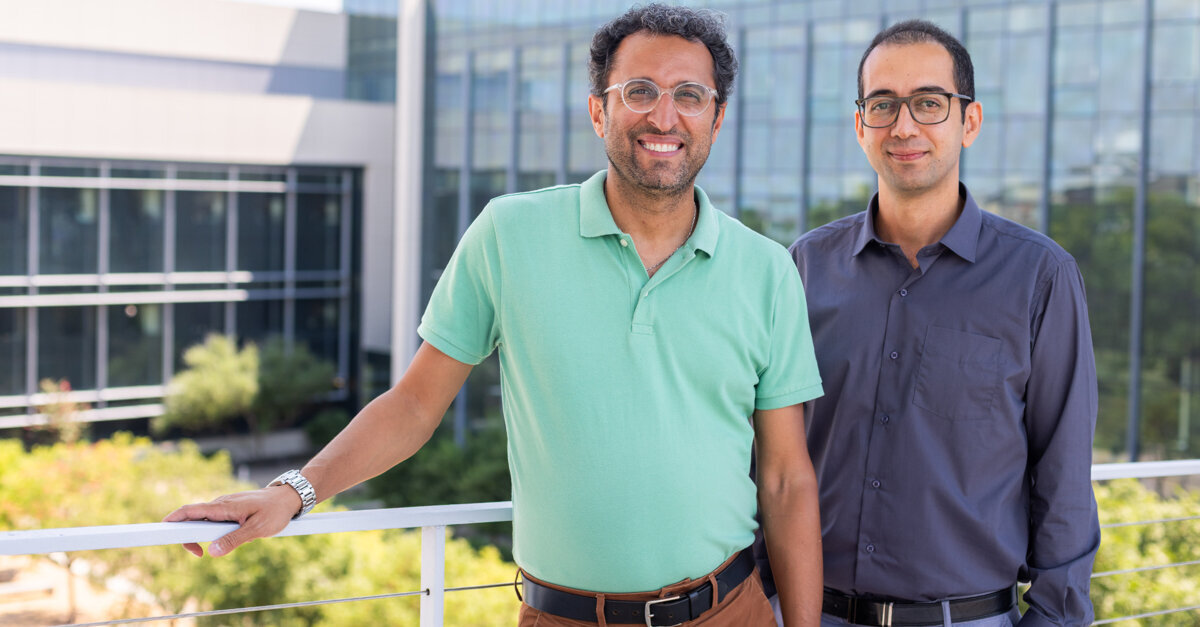
Professor Majid Minary (left) and mechanical engineering PhD student Mahdi Mosadegh are part of a team aiming to advance the commercialization of chairside 3D printed zirconia ceramic dental restorations. (Image: The University of Texas at Dallas)
According to the researchers, the new approach reduces processing times by up to 200 times and reduces energy use by 3,500 times compared to conventional methods. Despite the rapid heating cycle, zirconia components produced with the technique exhibit structural integrity and material properties equivalent to those achieved by standard debonding. According to a university press releasethe technology could be widely applied to a range of ceramic dental restorations and is being developed for commercial use with support from the US National Science Foundation.
Senior author Dr. Majid Minary, professor of mechanical engineering at the university’s Erik Jonsson School of Engineering and Computer Science, commented in the press release, “We are excited to advance the commercialization of permanent 3D-printed all-ceramic zirconia dental restorations.” He added: “Because crowns can be custom-printed for each patient on the same day, this approach offers greater personalization, faster treatment and the convenience of obtaining a permanent restoration in a single visit.”
The authors note that 3D-printed restorations offer greater customization and efficiency, potentially reducing manufacturing costs and material waste. Currently, same-day 3D printed crowns are based on ceramic-filled resins, which lack the strength of zirconia. Existing technology for same-day zirconia crowns is based on subtractive manufacturing processes, which pose challenges related to design complexity and the risk of microcracks during fabrication and fusion.
“The decoupling was the bottleneck in the process,” Professor Minary said. He went on to explain, “It has to be done very slowly. If you speed it up, the burning polymer turns into a gas, and if that gas can’t escape, the crown can crack or break. A bond time of 20 to 100 hours is not practical for the same-day dental service. As a result, commercially printed permanents are not yet commercially available.”
Professor Minary’s team and its collaborative partner, the Pan-Am Dental Laboratory, recently received a US$550,000 (€473,000*) National Science Foundation grant to advance the commercialization of the technology.
The study entitled “One-step thermal debonding for photopolymerization of a ceramic tank in less than 30 minutes”, published in September 2025 at Ceramics International.
Editorial note:
* Calculated on the OANDA platform for October 27 2025.
Subjects:
Tags:

Over the past two decades, there has been a growing demand for accelerated dental implant treatment protocols to minimize treatment duration and…

Highly aesthetic lithium bisilicate or zirconium-based framework materials combined with a micro-layer of porcelain are becoming the new standard for …

TOKYO, Japan: Efficiency and reliability are key requirements for products used in the modern dental office. CLEARFIL Universal Bond Quick 2 (Kuraray …

HILDEN, Germany: Providing a natural color gradient and high transparency, modern multilayer zirconia KATANA Zirconia STML (Kuraray Noritake …

AMSTERDAM, Netherlands: Additive manufacturing is gaining traction as an alternative to milling for the fabrication of ceramic restorations. However,…
Live webinar
Mon 10 Nov 2025
12:00 p.m. EST (New York)

doctor dent. Jhansi Anton Vetter
Live webinar
Mon 10 Nov 2025
2:00 p.m. EST (New York)

Dr. Adam Azim
Live webinar
Tue 11 November 2025
12:30 p.m. EST (New York)

Ulf Krueger-Janson
Live webinar
Marry. November 12, 2025
11:00 am EST (New York)

Sigrun Ratzer
Live webinar
Marry. November 12, 2025
12:00 p.m. EST (New York)

Dr. Ralph Seltman MA
Live webinar
Marry. November 12, 2025
3:00 p.m. EST (New York)

Dr. Martina Hodgson ChD MJDF PGDip
Live webinar
Thu 13 Nov 2025
12:00 p.m. EST (New York)

Prof. Dr. Bernd Wöstmann
