



The ADA provides guidance on the correct code
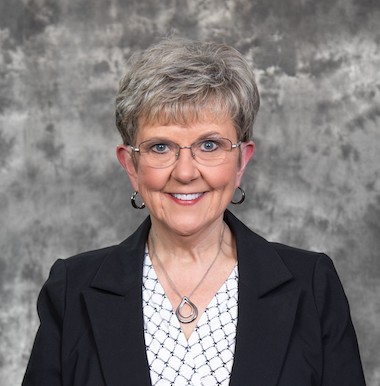
With the release of the latest CDT Code just around the corner, the American Dental Association hopes to help dentists avoid common coding mistakes as they begin using CDT 2026 on January 1.
“Often, denial and delay in payment of claims occur due to common coding errors. Always refer to the full nomenclature and description of the code, as well as the code for everything you do,” said Paula Crum, DDS, chair of the ADA Council on Dental Benefit Programs’ Coding and Transactions Subcommittee.
The following are examples and explanations of some common miscoding issues to help address potential misinterpretations during claims processing.
Example 1
The ADA is frequently asked if extraction with code D7210 (tooth extraction requiring bone removal and/or tooth incision and including mucoperiosteal flap elevation if indicated) can be reported for all extractions. In the past, this code was often referred to as the “surgical extraction code” since all extractions are essentially surgical procedures.
Code D7210 is appropriate when the clinical circumstances involve bone removal and/or tooth incision. However, code D7140 extraction, erupted tooth, or exposed root (elevation and/or forceps removal) may be the appropriate code to use when bone removal is not indicated and the erupted tooth is removed using an elevator or forceps. Both codes include removal of tooth structure, minor bone smoothing of the socket, and closure of the extraction site.
“Always refer to the full nomenclature and code descriptor on the difference between D7210 and D7140,” said Dr. Minister “It is imperative that each tooth is coded accurately according to clinical conditions.”
Example 2
Coding for the extraction of impacted teeth often raises questions. The CDT code includes four different codes for extracting an impacted tooth — D7220, D7230, D7240, and D7241 — and none of them are based on difficulty. Each records a different clinical presentation of the tooth and the procedural differences required to remove that tooth.
“Yes, removing a tooth impacted in soft tissue is usually easier than a completely bony impacted tooth, but this difference in effort is implicit, not explicit,” Dr. Crum said.
Example 3
The ADA often receives questions about how to properly document a “difficult” precaution, meaning a cleaning that takes longer than expected. Can code D4341 periodontal scaling and root planing — four or more teeth per quadrant or code D4342 periodontal scaling and root planing — one to three teeth per quadrant be used for a difficult cleaning, considering the amount of calculus present on the coronal surfaces of the teeth and the intensity required to remove it?
The descriptors for codes D4341 and D4342 say that they are indicated for patients with periodontal disease, so without this, the codes are not appropriate. Scaling and root planing is indicated for patients with periodontal disease and is curative, not prophylactic. The ADA Council on Dental Benefit Programs has developed a detailed guide to coding for scaling and root planing available at ADA.org/dentalinsurance.
Code D4346 scaling in presence of generalized moderate or severe gingivitis — full mouth, after oral assessment, may be applied if generalized moderate to severe gingivitis is present. This code is often an appropriate choice because a patient with heavy plaque and calculus may also have generalized moderate or severe inflammation. A full guide to using the D4346 code is available at ADA.org/publications/cdt/coding-education.
Code D4355 full mouth debridement is another option if build-up debridement is required to allow for a comprehensive periodontal evaluation and diagnosis. However, this code is not intended to be used to describe a difficult prophet. It should only be used if cleaning is needed to enable periodontal assessment. A full guide to using the D4355 code is also available at ADA.org/publications/cdt/coding-education.
“This issue, as described, shows what is most important in coding,” Dr. Cram said. “That is, the only way to codify is to literally define the procedure as shown in the full CDT Code entry.”
Example 4
Can dentists report code D3331 root canal treatment? non-surgical access, with every root canal procedure? The answer is no. This code is appropriate only when it is necessary to create an avenue for an apical seal without surgery due to an intractable canal obstructed by foreign bodies such as separated instruments, broken posts, or significant calcifications.
“Clinical documentation and radiographic evidence should support the use of this code,” Dr. Crum said.
Example 5
If a provider wants to use an expensive irrigation or irrigation aid instead of or in addition to the traditional sodium hypochlorite commonly used in root canals, there is no code that can be used to reflect the additional expertise and cost. Irrigation and other aspects of endodontic treatment are considered part of the root canal procedure itself and are included in the code set for the type of tooth being treated.
Likewise, alveoplasty is a separate procedure from extractions that are usually performed in preparation for a prosthesis or other treatments such as radiation therapy and transplant surgery. Any minor smoothing of the host bone or bone removal to enable or facilitate extraction is included in the extraction procedure code.
Some “golden rules” of process coding include:
• Code for what you are doing. This is the fundamental rule that should apply in all coding situations.
• After reading the full nomenclature and description, select the code that matches the procedure delivered to the patient.
• If there is no appropriate code, document the service using an “unspecified…procedure, by reference” code (ending in “999”) and include a clear and appropriate narrative.
• Understand that having a procedure code does not mean that the procedure is a covered or reimbursable service in a dental benefit plan.
• Plan treatment based on clinical need, not covered services.
• Discuss common coding situations with office team members so everyone understands how to use the CDT Code and review coding for complex treatment plans before claims are submitted to payers.
If dentists are having difficulty finding the appropriate CDT code, they should consider whether there may be another way to describe the procedure. The CDT Manual Alphabetical Index and Glossary of Clinical Terms available online at ADA.org/CDT may be useful in these cases. Dentists can also contact the ADA for assistance at dentalcode@ada.org.
