


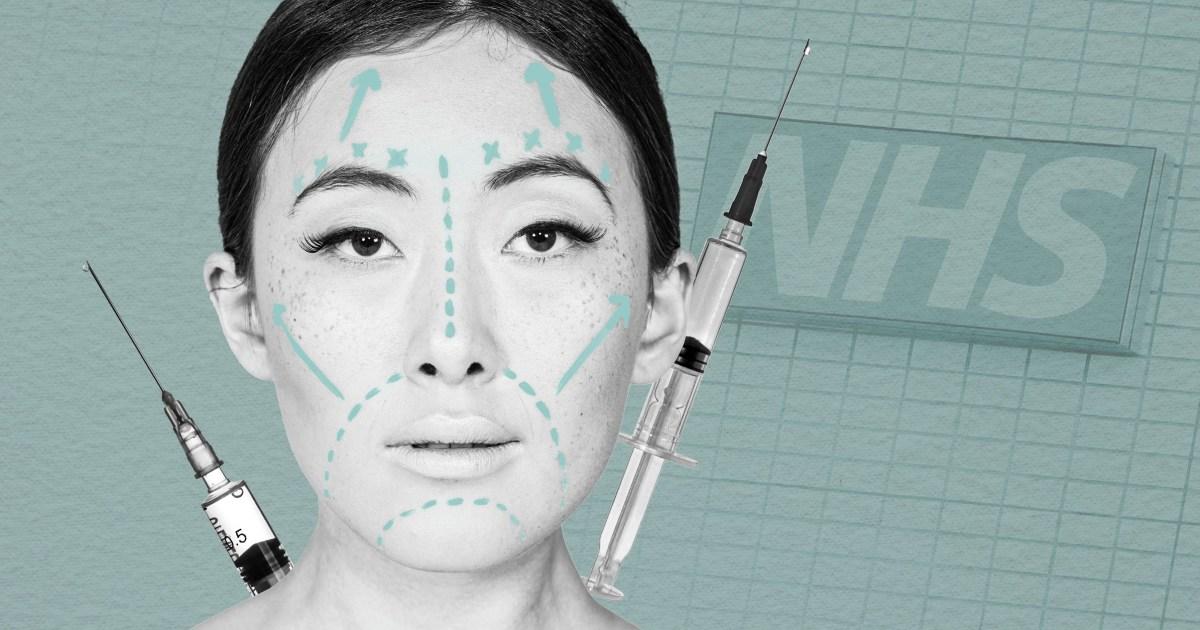
When 36-year-old mum-of-three Kaylie Bailey paid a beautician £75 to have three ‘Botox’ injections, she never thought it would stop her breathing.
Within days of the anti-wrinkle treatment, which was administered at a salon, he could barely see, so he headed to Sunderland Royal Infirmary.
After receiving the diagnosis of ptosis, also known as blepharoptosis or blepharospasm, she was sent home, with doctors telling her that it was likely due to her injections, but to see her doctor if she noticed any further changes.
But when Kaylie’s condition worsened over the next 48 hours, she was rushed back to hospital and diagnosed with botulism, a rare, life-threatening condition caused by bacteria that attacks the nervous system – and if left untreated, can lead to paralysis and respiratory failure.
That’s exactly what happened to Kaylie, who stopped breathing and had to be resuscitated, before spending three days in ICU where she was given antitoxin.
It turns out that she had been injected with Topxia, an illegal substance similar to but not the same as botulinum toxin (commonly referred to by the brand name Botox, although there are other brands, including Vistabel, Dysport, Bocouture and Azzalure), which is widely used.
“I remember lying in bed thinking, ‘I’m dying here and I don’t want to,'” she told the BBC.

Kaylie is one of 41 confirmed cases of botulism associated with botulism toxin between June 4 and August 6, 2025, according to the UK’s Health Safety Agency, sparking warnings about “dangerous unlicensed products”.
In response to this growing issue, the Harley Street Skin Clinic is now calling for urgent government action to ensure only specialist injectors can do cosmetic treatments.
It comes after the Chartered Institute of Environmental Health revealed that 68% of cosmetic injections are given by someone other than a doctor.
In the UK there are currently no legal training requirements for beauty therapists and aestheticians who inject botulinum toxin or dermal fillers.
Chair of the Women and Equalities Committee, Caroline Nokes MP, branded the industry a “wild west” in a Commons speech in August, calling for increased licensing and regulation, adding: “Anyone can do anything to anyone.”
This nonsense must end
Sophie Cooper, chief executive of Harley Street Skin, welcomes this, saying in an open letter: “Injectables like Botox and dermal fillers are prescription-only medicines for a good reason.
“They can cause blindness, necrosis, sepsis and systemic disease. When injected by a trained physician, these risks are addressed. When injected by someone without medical training, they are devastating.
“A doctor studies anatomy for years. A beautician can do a weekend class and start injecting the public.’
So much about beauty treatments is scrutinized, from tattoo ink to sunbeds. As Sophie points out, even paracetamol sales are limited, but the same is not yet true of cosmetic injectables.
He adds: “Today anyone, regardless of training, can inject powerful drugs into your face. When it goes wrong, the NHS foots the bill and the patient potentially pays with their life.
“This nonsense must end.”
What is iatrogenic botulism?
Botulism is a rare but life-threatening condition caused by toxins produced by the bacterium Clostridium botulinum that attacks the nerves, brain and spinal cord.
Most people make a full recovery, but if not treated quickly, it can lead to paralysis. In some cases, this can then spread to the muscles that control our breathing, which is fatal in 5% to 10% of cases.
Symptoms:
- droopy eyelids
- blurred or double vision
- facial muscle weakness
- difficulty swallowing (dysphagia)
- slurred speech
- breathing difficulties
Depending on the exact type of botulism, some people have initial symptoms such as feeling sick, being sick (vomiting), stomach cramps, diarrhea or constipation.
Treatment:
Botulism must be treated in hospital by neutralizing the toxins with an antitoxin injection and supporting bodily functions such as breathing until you can recover.
Source: NHS

With around 900,000 anti-wrinkle injections carried out each year in the UK, there are plenty of opportunities for things to go wrong. In 2024, the British College of Aesthetic Medicine recorded 3,547 cases of complications from non-medical injections, 60% of which were attributed to beauticians.
And while problems usually range from soft tissue infections to necrosis and scarring, they can be fatal, as evidenced by the death of mum-of-five Alice Webb in September 2024.
The 33-year-old is believed to have died as a result of a botched non-surgical Brazilian butt lift (BBL), where dermal filler is injected into the buttocks.
Since 2022, Save Face (a platform that connects patients with accredited doctors) has received more than 300 reports of people who have had devastating near-death experiences as a result of so-called “liquid” BBL and breast augmentation procedures, performed with massive amounts of dermal filler.
These procedures are so dangerous that 99% of 2,000 medically trained professionals surveyed by the organization refuse to offer them because of the significant risks.

After Alice’s death, a spokesman for the Department of Health and Social Care said: “We are exploring options regarding regulatory oversight of the non-surgical cosmetic sector and will update in due course.”
But intervention is needed sooner rather than later given this filler and anti-wrinkle treatments injected like pop-up shops, hotel rooms and even public toilets.
Not to mention, only 42% of patients say a specialist prescriber was present during their session, while nearly one in five patients surveyed as part of an Anglia Ruskin University study say they were not told about the risks.
Worryingly, 9% of those who had these injections did not even receive a consent form.
So if you’re considering a tweak or two, do your research and only get an injection with a registered medical professional. Better to be safe than sorry.
Choosing your practitioner to administer Botox
Considering everything we just mentioned, it is vital that you choose a medically trained professional to administer your Botox and filler.
For peace of mind, you should go to Save face website, which hosts accredited professionals who have had to pass a 116-point evaluation process.
The government-approved register means your doctor will be:
- Registered doctor, nurse, pharmacist or dentist
- Trained in every treatment listed on Save Face’s profile
- Fully insured
- Use of licensed suppliers for their products and equipment
- Work in a clinic that meets safety, hygiene and quality standards
Do you have a story to share?
Get in touch by emailing MetroLifestyleTeam@Metro.co.uk.
MORE: ITV medical drama ‘Thrilling’ canceled after 2 series despite 6,000,000 tuning in
MORE: Trump supporters are changing the face of plastic surgery – see how
MORE: Trump administration plans to crack down on ‘overweight’ visa applicants
