


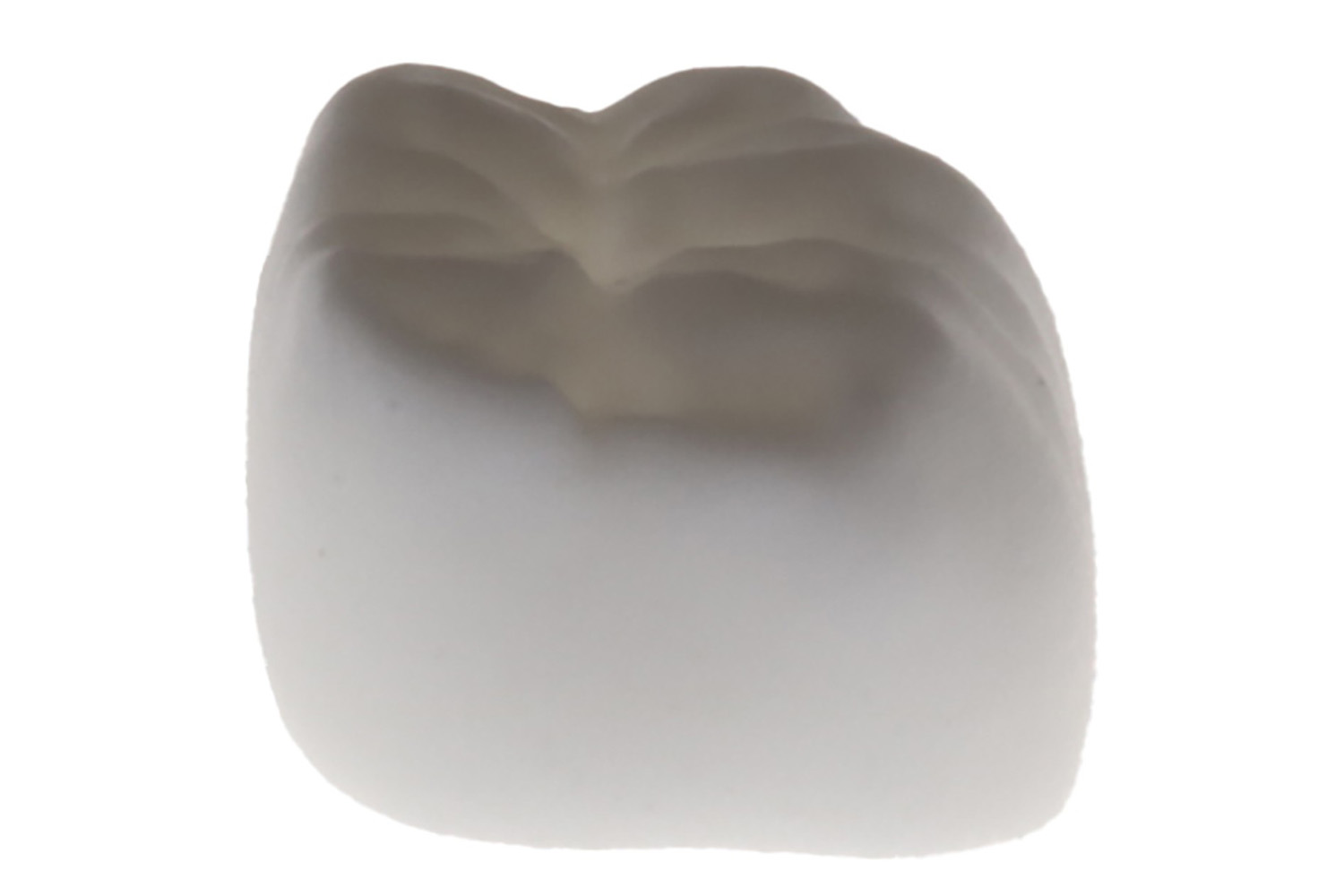
Researchers at University of Texas at Dallas (UT Dallas) have developed a technique that allows dentists to 3D print permanent zirconia crowns and other restorations in hours instead of days.
Posted on Ceramics International magazine, the method focuses on speeding up one of the most time-consuming parts of the process known as decoupling, which removes the resin binder that holds the zirconia particles together during printing. Traditionally, this stage can take up to 100 hours, because the resin must burn gradually to avoid cracking.
Supported by National Science Foundation (NSF) and US Air Force Office of Scientific Researchthe team approach cuts that time down to less than half an hour. The project has received an award of $550,000 (grant 2431684) from the NSF Partnerships for Innovation – Technology Translation Program to support commercialization.
Along with UT Dallas, efforts also came Pan-AM Dental Laboratory, 3DCeram Sintoand Dr. Amirali Zandinejad, a prosthetist from Arlington, and former associate professor at Texas A&M University College of Dentistry.

Faster recovery for dental restorations with zirconia
Zirconia is one of the strongest materials used in dental restorations, commonly applied to crowns, bridges and veneers. However, same-day crowns currently produced via 3D printing are typically made from resin-based ceramics that are less durable.
They can also be made in a day via milling, an ablative technique that carves the crown from a solid block of zirconia. But this process limits design flexibility and can cause microcracks during construction.
Using porous graphite capable of reaching temperatures above 2,550 °F and combining it with a vacuum system, the researchers found that gases released during heating could safely escape, preventing fractures that previously limited 3D printed zirconia restorations.
After debonding, the printed crown undergoes sintering, a high-temperature step that fuses the zirconia particles into a dense, solid form suitable for permanent dental work. According to the researchers, the shortened processing time could allow a dentist to print and place a zirconia crown during a single appointment using in-office equipment.
Dr. Majid Minary, who led the project and is a Professor of Mechanical Engineering at UT Dallas, identified the long debonding stage as the main obstacle to same-day zirconia printing. He said the new process combines heat transfer and vacuum-based systems that allow gases to escape efficiently, removing the need for the multi-day burnout period.
The researchers note that the method still requires clinical trials and regulatory approval before it can be adopted in dental practices. If validated, the technique could simplify the production of custom, permanent zirconia restorations and change the way dental materials are made.
Acceleration of dental restoration work
3D printing in dentistry has been shown to reduce restoration times in the past. For example, Boston Micro Fabricationof the dental department UltraThiner reported the use of 3D printed, non-preparative zirconia veneers to restore a 36-year-old patient with bruxism, overjet, discoloration, and anterior wear. Using digital smile design, sixteen ultra-thin veneers were designed in shade BL3 to improve alignment, symmetry and brightness while preserving enamel.
The 4-hour process involved careful cleaning, etching, silane treatment, and light-cured cementation to ensure strong adhesion and marginal integrity. After treatment, the patient received guarding and a sleep study referral. The case demonstrated how enamel retention, occlusion control and digital design can provide durable and natural esthetic results.
In Europe, Austrian ceramic 3D printing company Lithos presented new progress in lithium bisilicate material developed with Ivoclar using IPS e.max powder to produce custom, large-scale dental restorations LMT Lab Day Chicago last year.
Through its lithography-based ceramic manufacturing (LCM) process, the company demonstrated 3D-printed 0.3mm-thick veneers and translucent crowns that replicate natural teeth. A CeraFab System S65 Medical printer produced up to 50 restorations per run, or about 350 per day, with no material waste and a yield about eight times higher than conventional techniques.
Help choose it 2025 3D Printing Industry Awards winners – join the Expert Panel now!
To stay up to date with the latest 3D printing news, don’t forget to subscribe to 3D Printing Industry Newsletter or follow us LinkedIn.
While you’re here, why not subscribe to ours Youtube channel; Includes discussion, excerpts, short videos and webinar replays.
The featured image shows a finished dental crown created by the UT Dallas researchers’ technology. Photo via UT Dallas.
