


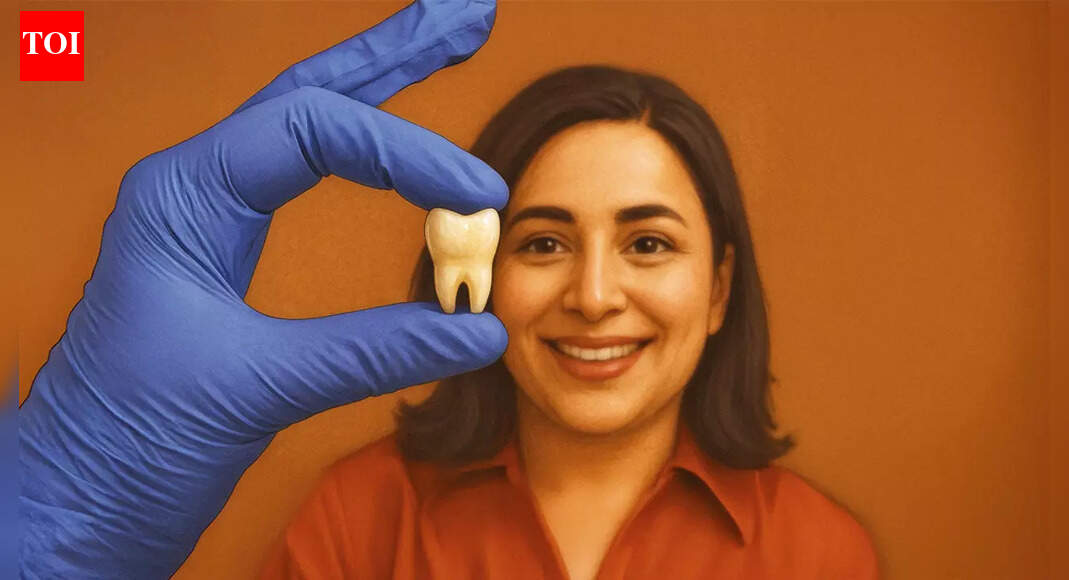
Imagine a future in which a missing or damaged tooth is not replaced with a crown, denture or titanium implant, but is simply grown – biologically – from your own cells. This possibility is moving closer to reality thanks to breakthroughs in regenerative dentistry. In April this year, a team at King’s College London (KCL), in collaboration with Imperial College London, announced that they had built a biomaterial scaffold that allows cells to communicate and form tooth-like structures in vitro – a key step towards lab-grown human teeth. Dr Ana Angelova Volponi, director of regenerative dentistry at KCL, said the research could “revolutionize dental care”. The study also notes that while some animals such as sharks and elephants can grow new teeth throughout their lives, humans only get one set as adults.
Because this mattersToday, if you lose a permanent tooth – whether from decay, trauma or congenital absence – treatment usually involves implants, bridges or dentures. Although effective, they rely on synthetic materials, surgery and often require long-term maintenance. KCL researchers emphasize that a biologically grown tooth will naturally integrate into the jawbone, with nerves and ligaments intact, behaving like a real tooth. This could reduce the long-term risks of wear, failure or rejection that accompany artificial replacements.A reason to smileThe real breakthrough is not in producing a fully developed tooth yet, but in creating the right laboratory environment for the tooth-forming cells to do their job. In previous experiments, cells placed on scaffolds failed to organize properly because developmental signals arrived at the same time. The new research, according to ScienceAlert, uses a hydrogel scaffold — a water-rich polymer — that releases signals gradually, mimicking the natural “matrix” in which teeth form. Within this structure, epithelial and mesenchymal cells (derived from mouse embryos at present) were able to interact and initiate the early stages of tooth formation. As reported by The Independent, scientists are exploring two possible avenues for clinical use:1) Transplant immature tooth-forming cells—a “tooth bud”—into the empty socket and let them grow naturally. or2) Growing a full tooth in the lab and then surgically implanting it. Each approach has trade-offs: growing in the mouth could minimize surgery, while lab-grown teeth offer more control. It is too early to say which will prove more effective.What is the advantage?Traditional fillings and implants have disadvantages. Fillings can weaken surrounding tooth structures, while implants require drilling and bone anchoring — with the risk of rejection, bone loss, or a limited lifespan. A lab-grown biologic tooth, derived from the patient’s own cells, will organically integrate with bone and ligaments, potentially remodeling and repairing itself like a natural tooth. However, the technology is not ready for patients. Much of the work remains preclinical, using animals or mixed human-mouse models. The latest KCL study relied on progenitor cells derived from mouse embryos to test the hydrogel scaffold, not yet fully human adult cells, ScienceAlert notes. Experts also point out that engineered teeth are currently not fully matured – they do not yet have a complete network of blood vessels, nerve supply or fully developed enamel and roots. Elsewhere, researchers in Japan are conducting early clinical trials of treatments that stimulate natural tooth regeneration in patients born without specific teeth—a different, but complementary, line of work.Challenges aheadSeveral technical, clinical and ethical hurdles remain. Scientists have yet to figure out how a lab-grown tooth could seamlessly integrate with nerves, blood vessels, periodontal ligaments and bone to function like a real one. To avoid rejection, each tooth must ideally be grown from the patient’s own cells — a process that is difficult to scale. And even if perfected, the path from lab to clinic involves years of testing, approvals, manufacturing protocols and cost trials before dentists can routinely offer regenerated teeth.A broader dental visionIf successful, tooth regeneration could transform dentistry itself. The field will shift from repairing damage with synthetic materials to restoring natural biology, focusing on prevention and regeneration. Someday, “just grow a new tooth” could replace “fill a filling” as the standard line in dental care. Although the timelines are uncertain, researchers are cautiously optimistic. Some predict that within the next decade, the technology could reach early human trials, starting with simpler single-tooth cases before expanding to more complex restorations. Either way, the foundation is being laid for a future where smiles can actually grow back—one cell at a time.
