


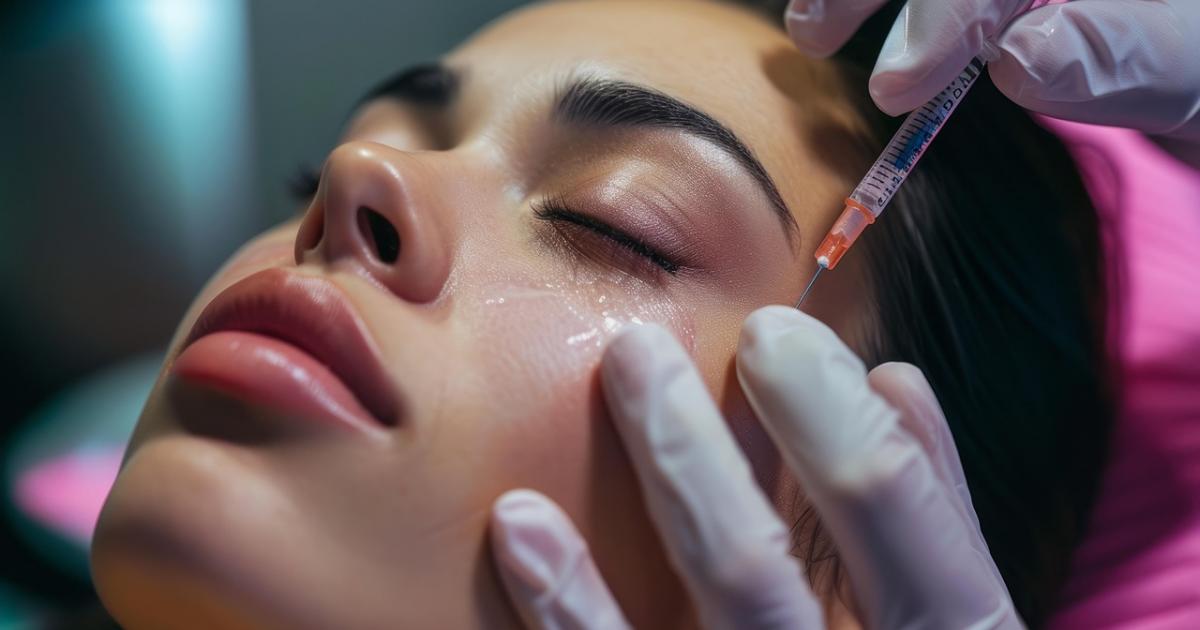
At the moment, anyone in Scotland can currently be trained to administer Botox and fillers within days, with no legal restrictions preventing non-healthcare workers from injecting once the prescriber has signed off on the product.
Jacqueline Cooney, director of the Scottish Medical Aesthetics Safety Group, told MSPs that social media has revealed how far standards have slipped.
“We’ve seen videos on social media of people getting injections or treatments in the back of taxis, in the backs of sheds,” he told the Health, Social Care and Sport Committee today, “And it’s appalling as a health professional to watch these things.
“Right now there’s no law that says that can’t happen, so I believe it [the bill] would prevent that from happening.”
READ MORE:
Under the proposed bill, ministers plan to introduce a minimum age of 18 for all cosmetic procedures and create a risk-based licensing system for practitioners and venues.
High-risk treatments such as dermal fillers and Botox should be supervised or provided by qualified healthcare professionals in settings regulated by Healthcare Improvement in Scotland. Lower risk procedures will also face new licensing requirements.
Some invasive procedures – including breast and buttock augmentation – will only be allowed in HIS-regulated settings under the proposals.
Health professionals in today’s committee agreed with the 18-year age limit and the overall aim of the bill, however, raised concerns about the need for further clarity on who would oversee certain procedures and how it would be regulated.
It comes after Advice Direct Scotland warned that people as young as 15 have been seeking advice on the malicious botox and filler treatment.
The panel heard that current complications from poorly performed cosmetic procedures range from scarring and burns to vascular occlusion, sepsis and even death.
Amanda Demosthenous, board member of the British Association of Medical Aesthetic Nurses, said such cases were now “commonly seen” in clinical practice.
“These procedures carry a number of risks. The worst ones are necrosis, vascular occlusion, death, sepsis, burns and scarring. There’s a whole range of different patient complications that we see quite often in our offices as well.”
Ms Demosthenous told MSPs that the current lack of regulation has created a dangerous culture where trust dramatically outstrips ability.
“What we’re seeing in practice is people taking a two-day course around business skills rather than the clinical side.
“These people then decide that they are capable and able to do these injectable treatments.
“Actually, it takes years and years of practice to get good and to work out the complications,” he said.
Ms Cooney warned that some training providers were actively fueling a misplaced sense of expertise.
“There’s an element of Dunning-Kruger syndrome where they’re told they’re qualified, so they think they’re qualified and they don’t think they’re doing any harm, but when we look at it from a more specialized level…it doesn’t seem that way to us.
The panel also heard that the industry’s commercial, influencer-driven culture distorts clinical priorities.
“The business side of selling to the patient rather than the clinical approach is currently the focus and that is not appropriate,” Ms Demosthenous said.
Ms Cooney told MSPs: “We have de-medicalized over the years what we think are medical treatments.
“We have to respect the fact that these are medicines.”
He argued that Scotland urgently needed an academic course in aesthetic medicine, with minimal national training standards.
“Some of these procedures carry high enough risks that you just wouldn’t want anyone just a member of the general public, even if it was someone who had done a day march. In my opinion, there’s not enough robust training behind it.
“There needs to be a certain level, an academic set standard for the future,” he said.
He pointed to a new postgraduate degree in aesthetic medicine currently being developed at Glasgow Caledonian University and due to start next September at postgraduate level, combining practical and academic training.
“It’s going to have a practical element to it and an academic element to it … that’s just absolutely necessary,” Ms Cooney said as she emphasized that esthetics are “manipulators”.
Ms Demosthenous said supervision was a “nebulous term” in the bill and further clarity was needed here, with Ms Cooney adding that the level of supervision of procedures needed to be “robust and appropriate”, as she said not every medical professional would feel competent in all treatments.
While she welcomed the bill, Ms Conney also wants to go “a bit further” with penalties for repeat offenders.
He said: “I think it needs to go a bit further. I think re-offending, you could just keep defying the bill. I don’t want it to be treated as if it’s just an expensive parking ticket and you’re going to be fined, and then fined and fined again.
“I think there needs to be something that goes on the record, because people can be harmed by these treatments.”
The legislation would also make it an offense to provide these procedures to under-18s.
The panel agreed that 18 would be an appropriate age to give informed consent for these procedures, however, it would be questionable what kind of procedures are clinically justified for someone of that age.
Ms Demosthenous said: ‘From a consent point of view, it is entirely possible that they have an understanding of treatment procedures at that age.
“It’s just the kind of field we’re in that makes it questionable whether it would be a clinically justified treatment.”
Executive director of strategy at the General Dental Council, Stefan Czerniawski, echoed Ms Demosthenos’ comments, with the panel sharing concerns about whether certain procedures are appropriate for an 18-year-old, rather than whether they can consent.
He said: “I think you have to be careful in distinguishing between what might be clinically appropriate for someone and the level at which they are able to give informed consent and understand the risks and benefits.
“I think 18 feels like the right place for informed consent. There may well be treatments that are completely inappropriate for 18-year-olds. I think that’s a different issue.
“I think it’s also important, however, that in a very small number of cases, there may be medical justification for treatment for someone who is under 18.”
The Bill will also give Healthcare Improvement Scotland new powers to enter and search premises if they suspect procedures are being carried out in breach of regulations.
As the field is not fully regulated, anyone can perform the procedures without formal training.
While there are around 550 independent clinics registered with Healthcare Improvement Scotland, government documents tabled alongside the legislation estimate there are 1,000-1,500 unregulated businesses operating in the sector.
The committee will continue to hear from industry and medical experts.
