


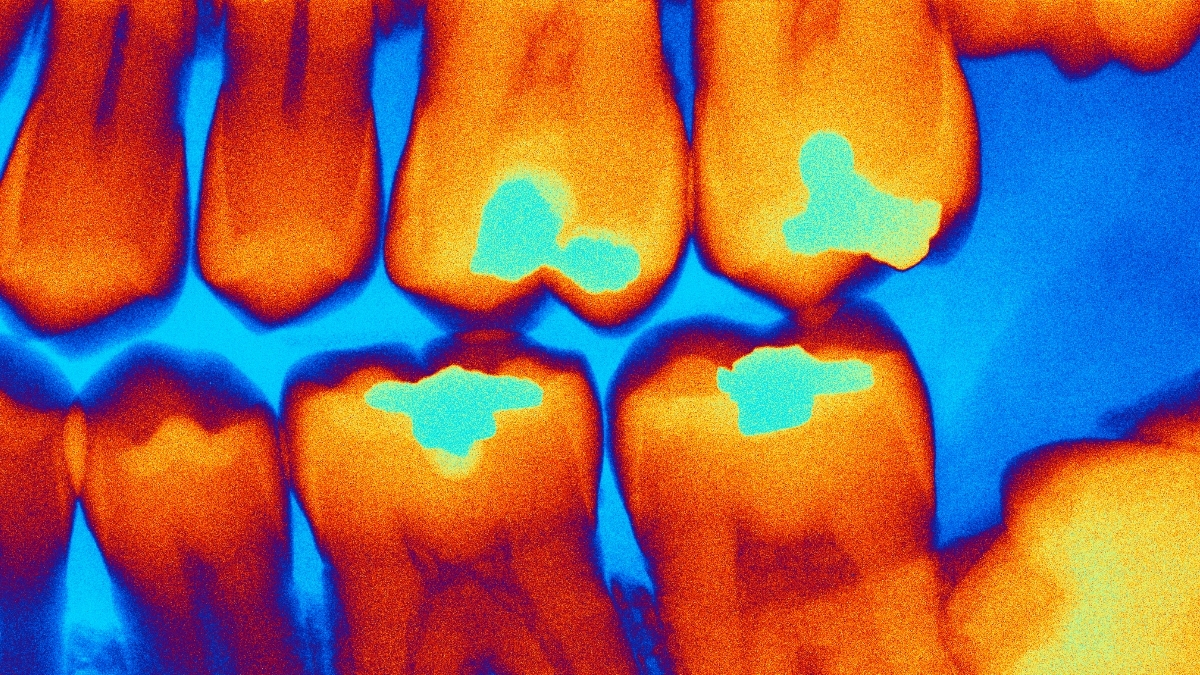
Countries agreed on Friday to phase out the use of mercury-based dental amalgam in tooth fillings by 2034, in a move that will change dentistry around the world.
At a conference in Geneva, signatories to a treaty aimed at protecting human health and the environment from mercury pollution called for time mercury amalgams.
Nations agreed “to end the use of dental amalgam by 2034, marking a historic milestone in reducing mercury pollution.” the conference announced in its final statement.
Related: Dentists could soon ‘repaint’ your tooth enamel with a simple gel
The World Health Organization lists mercury as one of the top 10 chemicals of major public health concerncalling it “toxic to human health”.
Some countries have already banned its use in dental amalgam, a common filling material that has been used for more than 175 years.
The Minamata Convention on Mercury is an international treaty to protect human health and the environment from the adverse effects of mercury and mercury compounds.
More than 150 countries are parties to the convention, which was adopted in 2013 and entered into force in 2017.
Parties at this week’s conference approved amendments “establishing a global phase-out of dental amalgam by 2034.” the final statement said.
“This science-based, time-bound agreement marks a decisive step toward the complete elimination of mercury use in dentistry and a safer future for all communities.”
African initiative
The treaty already required signatories to take steps to phase out the use of mercury-based dental amalgams.
However, a bloc of African countries wanted a deadline, with a ban on their production, import and export starting in 2030.
As the conference opened Monday, US Health Secretary Robert F. Kennedy Jr. asked why mercury deemed “hazardous in batteries, over-the-counter drugs, and makeup,” but acceptable in dental fillings.
“It is inexcusable that governments around the world continue to allow mercury-based compounds in healthcare – and there are safe alternatives,” he said in a video.
Some countries opposed the idea of phasing out by 2030, including Iran and India, and Britain, which said it was too soon.
But the countries came together and agreed to a phase-out by 2034.
“We’ve just opened the door to another chapter in mercury’s history book” said the executive secretary of the assembly Monika Stankiewicz.
“Mercury pollution is a scourge.”
However, “by understanding each other and bridging our differences, we can make a difference in the lives of people everywhere.”
“We have just concluded COP-6 with excellent results that will advance the work to eliminate mercury everywhere in the world.”
Watch Exec Sec Monika Stankiewicz’s message at #MinamataCOP6
More on COP-6: https://t.co/Byf8Whu3gQ
(with @UNEP @theGEF @MonikaStankiew3) pic.twitter.com/AIF3SSs6i4
— Minamata Convention on Mercury (@minamataMEA) November 10, 2025
The European Union representative called it “an important milestone in the history of mercury: a step that will bring lasting benefits to human health and the environment worldwide.”
Mexico, speaking for the countries of Latin America and the Caribbean, called it “an ambitious but realistic step towards a future free of mercury“.
Skin whitening cosmetics
In total, the conference adopted 21 decisions aimed at better protecting human health and the environment from mercury pollution.
Countries also agreed to step up efforts to eliminate cosmetics containing skin bleaching mercurythrough curbing illicit trade and strengthening enforcement.
When added to cosmetics, mercury brightens the skin by suppressing melanin production. However, the process is not permanent and is hazardous to health.
The conference heard that sales of such products have soared, especially online.
Related: Scientists discover simple method to reduce mercury levels in tuna
Countries are also moving away from the use of mercury in small-scale gold mining and the feasibility of mercury-free catalysts for the production of vinyl chloride monomer (VCM) – a key component of PVC plastic.
Conference president Osvaldo Alvarez Perez said: “We have set new ambitious goals and left mercury a little further back”.
© Agence France-Presse
